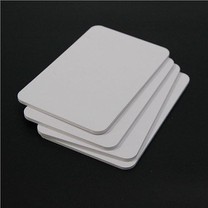
How to Choose 3mm PVC Foam Board for UV Printing
3mm PVC foam board is often considered for direct UV printing because it combines a rigid sheet format with relatively low weight. However, thickness alone does not determine printing performance. Surface quality, flatness, density and production consistency should also be considered before placing a bulk order.
Why Use 3mm PVC Foam Board for UV Printing?
When a printed panel needs to be rigid but does not need to carry a significant load, a thin PVC foam board can be a practical material option.
3mm PVC foam board provides a solid sheet format while remaining relatively easy to handle and process. It can be cut into different shapes and used for printed graphics, exhibition panels, indoor displays and other light-duty visual applications.
For printers, the key question is not simply whether a board is 3mm thick. The more important question is whether the board provides the surface and dimensional consistency required for the actual printing process.
What Makes a 3mm PVC Board Suitable for Printing?
Several material characteristics should be checked when selecting a 3mm PVC board for printing.
| Factor | Why It Matters |
|---|---|
| Surface finish | Affects the appearance of printed graphics |
| Flatness | Helps provide consistent contact during printing |
| Thickness consistency | Useful for stable processing and mounting |
| Density | Affects weight and overall board characteristics |
| Color consistency | Important when producing multiple panels |
| Protection during packing | Helps reduce surface damage during transportation |
Should You Test a Sample Before Bulk Production?
Yes. A sample test is especially useful when the board will be used for direct UV printing.
Different printers, inks and printing settings can produce different results. A supplier may provide a technically suitable board, but the final result still needs to be confirmed using the customer's own production process.
A practical sample test can include:
- Checking surface condition before printing
- Testing several ink colors
- Checking image sharpness
- Observing ink adhesion
- Checking the finished surface after printing
- Testing cutting or drilling after printing if required
This is more reliable than selecting a material only from a specification sheet.
What Density Should You Choose?
Density is another important consideration when buying PVC foam board.
Different projects can require different balances between weight, rigidity and processing characteristics. For this reason, buyers should compare the actual density together with the board thickness rather than comparing thickness alone.
For example, two suppliers may both quote 3mm PVC foam board while offering different densities. The resulting sheet weight and material characteristics may therefore be different.
When requesting a quotation, it is useful to specify both the required thickness and density.
3mm PVC Foam Board for Different Printing Projects
Not every printed panel has the same requirements. The finished application should be considered before selecting the material.
| Printing Project | Points to Consider |
|---|---|
| Indoor graphic panels | Surface finish and appearance |
| Exhibition graphics | Weight, rigidity and easy installation |
| Retail display graphics | Appearance and fabrication |
| Poster mounting | Flatness and panel rigidity |
| Promotional displays | Weight, cutting and mounting method |
When 3mm May Not Be the Right Choice
A common mistake is choosing the board thickness based only on its printing application.
If the finished product needs to support shelves, heavy fittings, cabinet hardware or other significant loads, a 3mm board may not provide the required structure.
In those situations, buyers should consider thicker PVC foam board and evaluate the complete construction, including density, fixing method and reinforcement.
For furniture and cabinet applications, our PVC Cabinet Board range may be more relevant than a thin printing board.
3mm PVC Foam Board Processing After Printing
One advantage of using a rigid PVC board for printed graphics is that the sheet can be further fabricated after printing when the project requires it.
Depending on the finished design, common operations can include:
- Cutting
- Drilling
- Engraving
- Trimming
- Mounting
The exact processing method should be selected according to the board specification and finished design.
What Should Be Included in a Supplier Quotation?
A professional quotation for 3mm PVC foam board should provide enough information for the buyer to compare suppliers accurately.
| Item | Information to Confirm |
|---|---|
| Thickness | 3mm |
| Density | Required density or available options |
| Sheet size | Standard or customized dimensions |
| Color | Standard white or customized color |
| MOQ | Minimum order quantity |
| Packing | Export packing method |
| Lead time | Estimated production period |
For current product specifications and customization options, see the 3mm PVC Foam Board product page.
Final Checklist for Buyers
Before placing an order, buyers can use this simple checklist:
- Confirm the actual application.
- Confirm the required board thickness.
- Confirm density and sheet weight.
- Check the surface condition.
- Request a sample for UV printing.
- Test the sample using the actual production process.
- Confirm packing and delivery requirements.
Choosing the material based on the complete production process can help avoid problems after the bulk order arrives.
Related Pages
3mm PVC Foam Board - Specifications, sizes, densities and customization.
PVC Cabinet Board - PVC foam board options for cabinet-related applications.