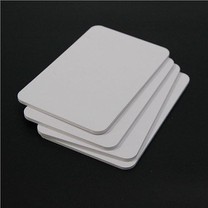



Why PVC Foam Board May Bend After Shipping and How to Handle It
After receiving PVC foam board, some customers may notice that a few sheets are not completely flat. They may look slightly bent, curved or warped.
This situation can happen after long sea shipping, long storage in a container, or if the sheets are pressed unevenly during loading and storage. In most cases, slight bending does not mean the board has a quality problem. PVC foam board is a lightweight foamed sheet, so temperature, pressure and storage method can affect its flatness.
Common reasons for bending
For export orders, PVC foam sheets usually stay in the container for several weeks. During this time, the container may become hot, especially in summer or in high-temperature areas. If the boards are packed tightly or kept under pressure for a long time, some sheets may become slightly curved after unloading.
Another common reason is uneven stacking. PVC foam board should be placed on a flat pallet with full support. If the pallet is not flat, or heavy goods press only one side of the board, the sheets may slowly bend.
Thin PVC foam board is more likely to have this issue. For example, 2mm, 3mm and 5mm PVC foam sheets are more flexible than thicker boards, so they need better support during storage and handling.
Long-time leaning storage can also cause bending. Some customers put the sheets against the wall after receiving the goods. This is convenient for short-time handling, but it is not suitable for long-term storage, especially for thin sheets and large-size boards.
High temperature and direct sunlight should also be avoided. If one side of the board is heated more than the other side, the sheet may become easier to deform.
What to do if the board is slightly bent
If the bending is not serious, the first step is to lay the boards flat. Place them on a clean, level surface and make sure the whole sheet is supported.
For slightly curved sheets, customers can stack the boards flat and add light, even pressure on top. The pressure should cover the whole surface as much as possible. Do not press only the middle or one corner, because this may create new deformation.
If the boards have just arrived from a hot container or cold warehouse, it is better not to process them immediately. Keep them indoors for a period of time and let the material adapt to room temperature. This is helpful before UV printing, CNC cutting, lamination or cabinet production.
Better storage method
To keep PVC foam board flat, we suggest storing the sheets horizontally on a pallet or flat platform. The board surface should be fully supported.
Try to avoid long-time vertical storage. Do not place heavy goods on one side of the sheets. The storage area should be dry, ventilated and away from direct sunlight or heat sources.
These points are especially important for thin PVC foam sheets, large-size PVC foam boards and sheets used for printing or lamination, because flatness will affect the final processing result.
When to check with the supplier
Slight bending can usually be improved by correct storage and even pressure. But if the board has serious warping, obvious shrinkage, surface damage, or does not improve after proper handling, customers should contact the supplier.
Clear photos and videos are helpful. It is better to show the packaging condition, pallet condition, bending direction and storage method after unloading. This makes it easier to check whether the problem came from transportation, storage or the board itself.