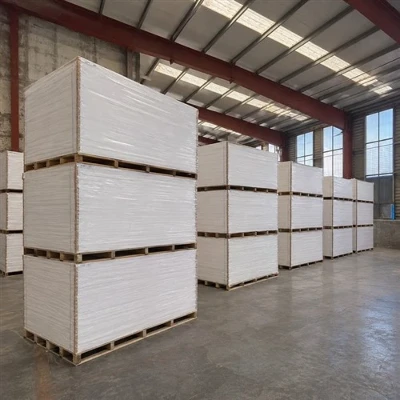
When Should Protective Film Come Off?
A sheet can arrive clean and still develop finishing problems if its temporary protective film is removed at the wrong stage. For Standard Foamex PVC Board, the useful question is not simply whether film is supplied. It is which operations the film must survive, which face must be exposed, and when the bare surface needs inspection.
Key principle
If ink or a permanent adhesive must contact the PVC itself, remove the temporary mask from that face first. For storage, handling or machining, retain it only where the agreed film and process are suitable.
01 · Identify the Layer Before Removing It
"Film" can describe several different layers on a finished panel. A removable protective mask is intended to protect the surface during handling. Printed vinyl and decorative laminates form part of the finished appearance. A permanent graphic overlaminate has another purpose again. Their removal decisions are different.
| Layer | Main role | Removal decision |
|---|---|---|
| Temporary protective mask | Handling and surface protection | Remove before an operation requiring contact with bare PVC, or at the agreed handover stage. |
| Printed vinyl or decorative laminate | Finished graphic or decorative surface | Normally remains as part of the specified panel system. |
| Permanent graphic overlaminate | Protection of the finished image | Remains according to the graphic supplier's instructions. |
When ordering Standard Foamex PVC Board, specify temporary protection separately from any permanent finish. Also identify whether one face or both faces require protection. A transparent removable mask does not establish outdoor durability, fire performance or permanent scratch resistance.
02 · Match Removal to the Next Operation
Direct Printing
Expose the intended print face before applying ink directly to the sheet. Otherwise, the image is being placed on the temporary mask rather than on the PVC substrate. Peel in a clean preparation area, inspect the exposed surface and complete the printer supplier's preparation procedure before production.
Vinyl Mounting and Adhesive Bonding
Where the design requires a permanent bond to PVC, remove the temporary mask from the bonding area. An adhesive that grips the mask has not demonstrated adhesion to the board. Trial the actual adhesive or vinyl system on the exposed grade, using the application and conditioning instructions supplied with that system.
CNC Cutting and Drilling
Leaving a mask attached may help protect a visible face, but suitability must be checked with the machining arrangement. A film that peels easily by hand has not automatically been shown to stay secure during routing. Evaluate lifting, tearing, chip accumulation and subsequent removal on a representative component. The mask is not a workholding device.
03 · Allow for Static After Peeling
Separating a protective film from a plastic sheet can generate electrostatic charge. Palram's PVC fabrication guidance identifies film removal as a possible source of charge affecting ink coverage; static-control guidance from KEYENCE also explains the connection between charge and particle adhesion. These are reasons to investigate static when contamination returns after cleaning, rather than assuming the board is inherently dirty.
Follow the printer manufacturer's approved static-control procedure, which may include suitable ionization equipment. A plain wipe or ordinary air blow is not evidence that charge has been neutralized. Handle the prepared sheet by its edges or with suitable clean gloves, and keep it away from nearby cutting debris.
What this does not establish
Protective film does not make a board an anti-static grade. No surface-resistivity value or static-decay performance is implied by the presence of a removable mask.
04 · Investigate Difficult Removal Before Cleaning
Film removal can be affected by storage and exposure. Palram warns that heat and direct sunlight can make its protective films harder to remove. For a purchased board-and-film combination, obtain the applicable storage conditions and removal period from its supplier; another product's time limit is not a specification for your order.
If a mask tears repeatedly, leaves tacky patches or appears to alter the surface, pause on the affected sheets. Record the package reference, storage history and appearance immediately after peeling. Ask for a compatible investigation or cleaning method before applying a stronger solvent or unapproved heat treatment. A surface that looks cleaner afterward still needs a finishing trial if its preparation method has changed.
05 · Run a Small Film-to-Finish Trial
A useful trial for Standard Foamex PVC Board follows the proposed production sequence, rather than testing only an untouched sample.
Record the starting material. Note the board grade, face, film identification where available, and storage history.
Reproduce the operations. Include machining with the mask attached if that is the planned method.
Inspect immediately after peeling. Photograph any residue, surface marks or loose particles before cleaning.
Finish the exposed face. Use the intended ink or adhesive and its required preparation and conditioning procedure.
Compare the completed component. Review the visible face, cut edge and finishing result against agreed acceptance criteria.
Keep handling protection and finishing compatibility as separate approval points. Passing one does not prove the other, and a clean initial peel does not establish unlimited storage life.
Frequently Asked Questions
Can I print onto the protective mask?
Only if the job is specifically designed and validated for that separate film. It does not qualify ink adhesion to the PVC beneath it. For direct-to-board printing, expose the board's print face.
Can film be reapplied over fresh printing?
Do not assume the original transport mask is suitable for finished ink. Confirm curing, contact compatibility and removal behavior with the ink and protection-film suppliers before re-masking a printed panel.
Does a low-tack label guarantee clean CNC processing?
No. It describes an adhesion characteristic, not a complete machining qualification. Cutting conditions, film integrity, storage and removal still need to be assessed together.
Plan Protection Around Your Finishing Process
Discuss your Standard Foamex PVC Board requirement with Zibo Kaichuang Plastic Co., Ltd. Share the sheet specification, protected face or faces, processing sequence and expected storage conditions. These details help us discuss protective-film options and a practical sample evaluation before the bulk order.
Email:emma@kaichuangplastic.com